
A good looking bottle, as we talked about last month, is a combination of several elements. After taking a more in depth look at what is going on toward the top, time has come to look at bottles and labels.
Glass Bottles:
There are several types of finishes used in the wine business. WineShop At Home currently bottles its wines with only two of them, the screw cap finish and the standard, or cork finish.
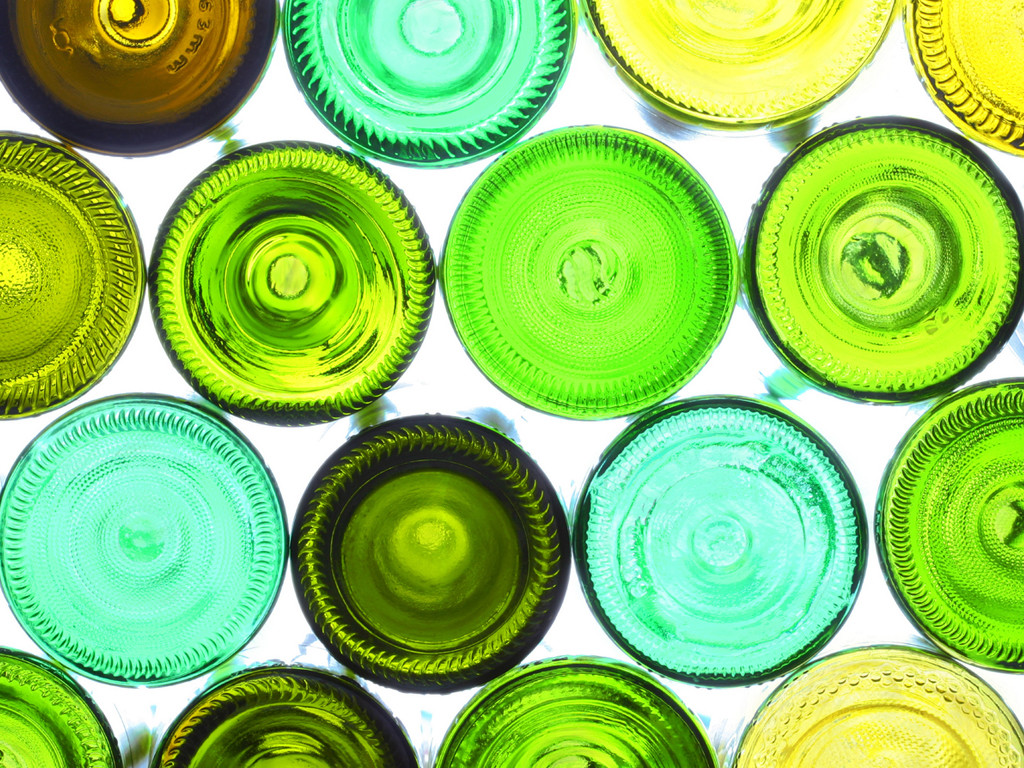 The bottom of the wine bottle, known as the bearing surface, heel, punt or knurling, is designed for stability to avoid excessive sliding of the bottle. To my knowledge, every manufacturer has its own design and I am not aware that there is a particular significance between all of them. However, the markings around and underneath the bottle are very useful. They indicate the volume, the manufacturer, the date of conception and the oven cavity number the bottle was baked into -- this last part is very useful for quality control issues with a truckload of cases.
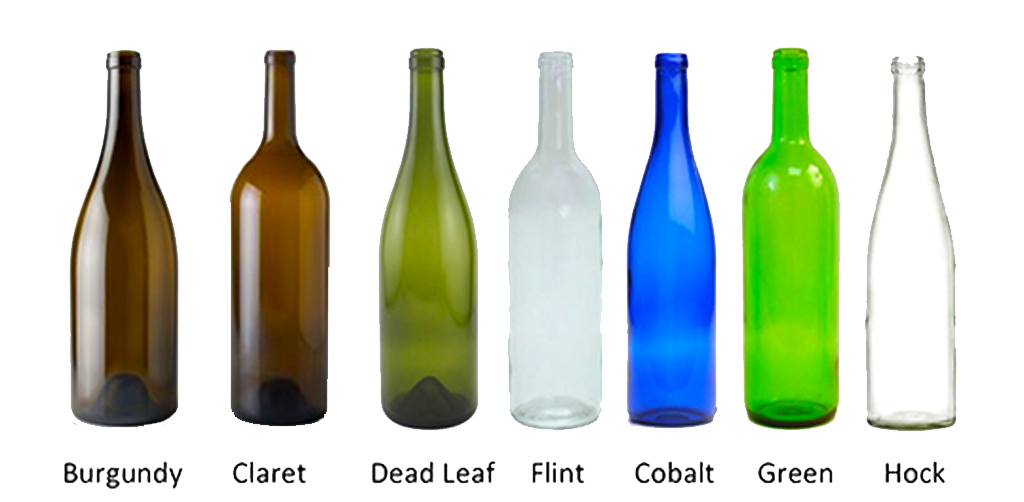 The style of bottle or "glass mold," has been associated with a particular wine region.
 So how does the label get designed? And what is the process for creating and finalizing its design? Well, the label design process stays mostly the same: it starts with the creative team brainstorming new ideas, then continues with several weeks of working the concept with multiple versions that slowly evolves to the final design. How the design of the label comes about or what inspires the label concept varies from brand to brand. Some labels are inspired by the bottle shape or color. Some labels start as a concept from the creative team that comes to them via specific inspirations from a great name or image, while some begin with an evaluation of colors, textures or foils that are new, popular or different from the current portfolio of brands.
Of course, marketing research and looking at what’s popular with wines in the market will inform the creation of our brands, but not entirely, which is a definite luxury we have here at WineShop At Home. Because our brands are exclusively offered from our Home Winery through our Wine Clubs and Tasting Samplers, we’re able to experiment with different designs. We have lots of fun designing completely different brands – all in the goal to catch the eye and dazzle different people with different styles across the nation.
We truly try to provide as many different styles of labels – from fun and bright all the way to stately and classic – as the many wine varietals, blends and styles, from everyday wines to our top-tier special occasion wines that we offer our customers. And while we have fun creating the labels, the ultimate satisfaction is seeing the entire finished package of one of our wines, from the bottle shape, the label that wraps it and the capsule that tops it off, and finally seeing the vision take shape and reaches completion. And, of course, comments like Kelly’s “Isn't this label GORGEOUS?!” give us a sense of accomplishment for a job well done.
So how does the label get designed? And what is the process for creating and finalizing its design? Well, the label design process stays mostly the same: it starts with the creative team brainstorming new ideas, then continues with several weeks of working the concept with multiple versions that slowly evolves to the final design. How the design of the label comes about or what inspires the label concept varies from brand to brand. Some labels are inspired by the bottle shape or color. Some labels start as a concept from the creative team that comes to them via specific inspirations from a great name or image, while some begin with an evaluation of colors, textures or foils that are new, popular or different from the current portfolio of brands.
Of course, marketing research and looking at what’s popular with wines in the market will inform the creation of our brands, but not entirely, which is a definite luxury we have here at WineShop At Home. Because our brands are exclusively offered from our Home Winery through our Wine Clubs and Tasting Samplers, we’re able to experiment with different designs. We have lots of fun designing completely different brands – all in the goal to catch the eye and dazzle different people with different styles across the nation.
We truly try to provide as many different styles of labels – from fun and bright all the way to stately and classic – as the many wine varietals, blends and styles, from everyday wines to our top-tier special occasion wines that we offer our customers. And while we have fun creating the labels, the ultimate satisfaction is seeing the entire finished package of one of our wines, from the bottle shape, the label that wraps it and the capsule that tops it off, and finally seeing the vision take shape and reaches completion. And, of course, comments like Kelly’s “Isn't this label GORGEOUS?!” give us a sense of accomplishment for a job well done.
The bottom of the wine bottle, known as the bearing surface, heel, punt or knurling, is designed for stability to avoid excessive sliding of the bottle. To my knowledge, every manufacturer has its own design and I am not aware that there is a particular significance between all of them. However, the markings around and underneath the bottle are very useful. They indicate the volume, the manufacturer, the date of conception and the oven cavity number the bottle was baked into -- this last part is very useful for quality control issues with a truckload of cases.
The style of bottle or "glass mold," has been associated with a particular wine region.
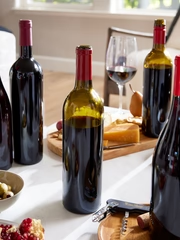
- A Pinot Noir is traditionally bottled using a Burgundy-style bottle with no shoulders.
- Malbec, Merlot, Cabernet and Bordeaux varietals are usually bottled with a Claret style bottle.
- Within the Burgundy-style and Claret-style categories, there are several colors, shape of shoulders and weight differences.
- The Frisch 2012 Riesling comes in an Alsatian type of bottle called Hock.
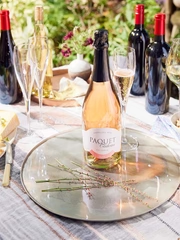
- The Grand Cadeau Rosé Sparkling and Petit Cadeau Semi-Seco have a special type of bottle designed for sparkling wines built to withstand pressure.
So how does the label get designed? And what is the process for creating and finalizing its design? Well, the label design process stays mostly the same: it starts with the creative team brainstorming new ideas, then continues with several weeks of working the concept with multiple versions that slowly evolves to the final design. How the design of the label comes about or what inspires the label concept varies from brand to brand. Some labels are inspired by the bottle shape or color. Some labels start as a concept from the creative team that comes to them via specific inspirations from a great name or image, while some begin with an evaluation of colors, textures or foils that are new, popular or different from the current portfolio of brands.
Of course, marketing research and looking at what’s popular with wines in the market will inform the creation of our brands, but not entirely, which is a definite luxury we have here at WineShop At Home. Because our brands are exclusively offered from our Home Winery through our Wine Clubs and Tasting Samplers, we’re able to experiment with different designs. We have lots of fun designing completely different brands – all in the goal to catch the eye and dazzle different people with different styles across the nation.
We truly try to provide as many different styles of labels – from fun and bright all the way to stately and classic – as the many wine varietals, blends and styles, from everyday wines to our top-tier special occasion wines that we offer our customers. And while we have fun creating the labels, the ultimate satisfaction is seeing the entire finished package of one of our wines, from the bottle shape, the label that wraps it and the capsule that tops it off, and finally seeing the vision take shape and reaches completion. And, of course, comments like Kelly’s “Isn't this label GORGEOUS?!” give us a sense of accomplishment for a job well done.